Environmental Management Policy
Responsible Consumption and Production
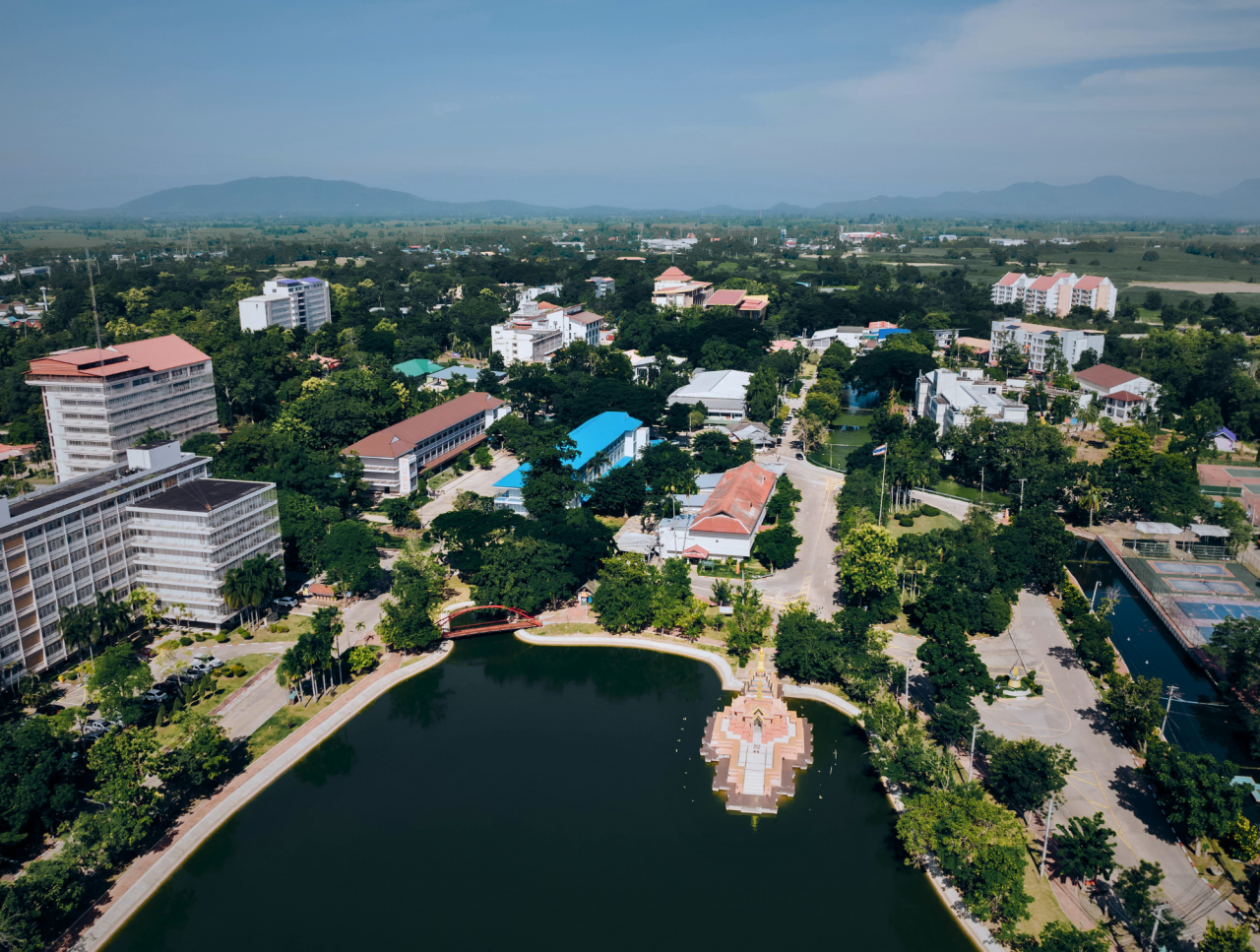
Kamphaeng Phet Rajabhat University is committed to being a sustainable university and drive the university to be an environmentally friendly university, conducive to student learning, be a role model to public and communities. In order to achieve the objectives of environmental management and to be efficient in it, by the virtue of section 31 of the Rajabhat University Act B.E. 2547 and resolution adopted at the 11/2023 University Executive Meeting on November 7, 2023, thereby issue a notification of Kamphaeng Phet Rajabhat University of Environmental Management Policy for staff, students, and public to participate and help driving the university to be a sustainable university as follows:
1. This notification shall be referred to as “Notification of Kamphaeng Phet Rajabhat University on Environmental Management Policy B.E. 2566.”
2. This notification shall come into force as from the day following the date of its announcement.
3. Kamphaeng Phet Rajabhat University promotes environmental management system together with communicating the mention policy, its objectives, and operational guidelines by focus on the participation of all sectors in the university.
4. Promoting the building and environmental management according to the green university guidelines.
5. Supporting and encouraging the conservation of natural areas, restoration of degraded areas in consideration of the development of eco system and biodiversity.
6. Encouraging all sectors in the university to reduce energy consumption, improve energy consumption to be suitable and effective as well as using of alternative and renewable energy.
7. Campaign to reduce greenhouse gas emissions and support of the operation to becoming carbon neutral university.
8. Encourage and support of developing waste and hazardous substances management system according to 3Rs principles.
9. Raising awareness and participation in reducing the use of plastic, foam, and single-use plastic as well as how to properly dispose of them.
10. Encourage the university to have an environmentally friendly procurement system.
11. To have an efficient operational management, control, and improvement system of wastewater to verify and follow the quality of water and use of treated water appropriately.
12. Encourage the use of zero carbon emission vehicles. Improve the efficiency of public transportation. Reduce usage of private vehicles within the university and determine of the suitable parking area.
13. Support of creating curriculums, workshops, or activities related to environmental and sustainability as well as distribution of knowledge and academic services for other agencies or communities.
14. The university must follow, inspect, and assess of operating out come as well as review and revise the policy, objectives, and operating plan on environment, continuously and develop the university to be a sustainable environmental management model to extend the results to local communities. Please kindly be informed accordingly. Announced on November 9, 2023
Environmental Management Policy
 Related SDGs
Waste Management
Responsible Consumption and Production
Kamphaeng Phet Rajabhat University (KPRU) actively promotes and supports effective waste management systems based on the 3Rs principles — Reduce, Reuse, Recycle — to ensure environmentally responsible operations across the campus. The university has issued clear waste separation guidelines for staff, students, and visitors, encouraging proper disposal at designated collection points in all buildings.
KPRU’s waste management framework aligns with the UI GreenMetric University Sustainability Indicators, reflecting the institution’s strong commitment to sustainable campus operations. More information is available at https://ga.kpru.ac.th/ui-green/?page_id=1065.
Waste Management Measures
- Establish a Waste Management Committee responsible for overseeing and monitoring all campus waste management operations.
- Promote awareness and education campaigns to encourage proper waste sorting and the beneficial reuse of materials.
- Maintain clean, accessible, and clearly labeled collection points throughout campus buildings to make waste separation easy and attractive.
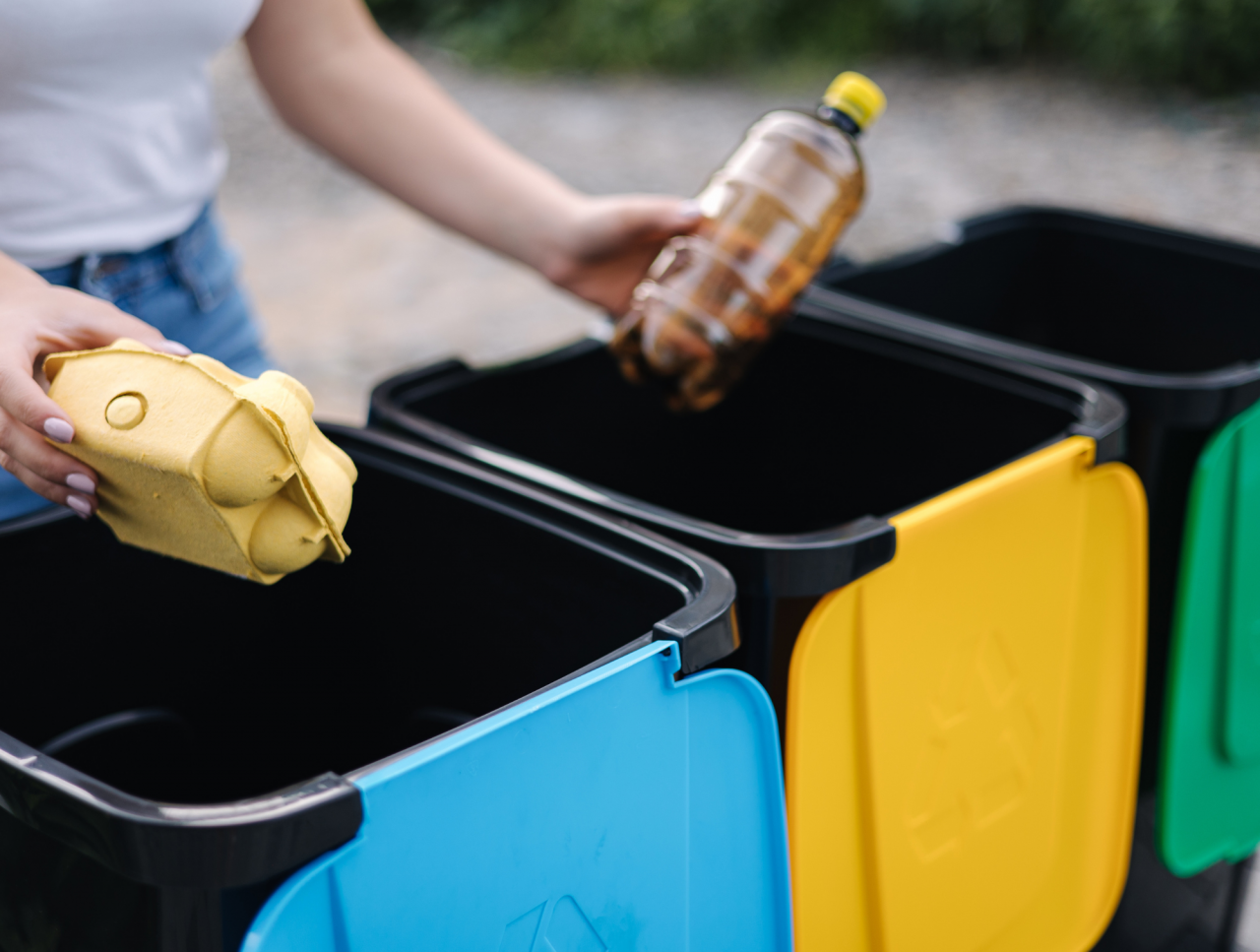
- Provide color-coded bins on every floor, categorized by type of waste.
- Regularly inspect and collect separated waste, ensuring it follows the designated waste management route under staff supervision.
- Restrict food consumption in operational areas; a designated dining space is provided on the first floor of each building.
Waste Classification and Management
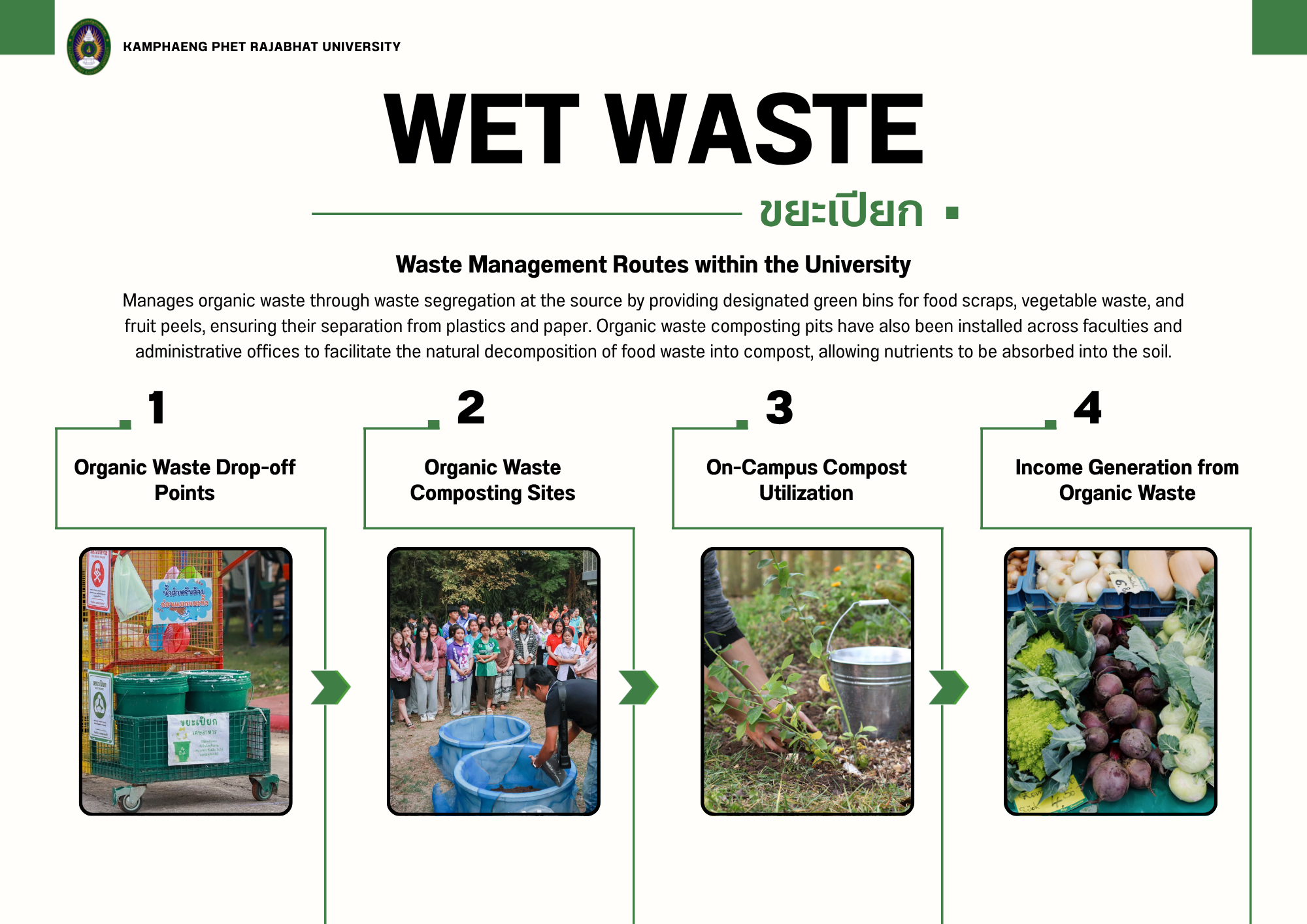
- Organic Waste (Wet Waste) – Includes food scraps, vegetable waste and fruit peels. KPRU promotes segregation at source by providing designated green bins to keep organic waste separate from plastics, paper and other waste. Organic waste is collected and processed at composting sites across faculties and administrative offices, where natural decomposition converts it into compost and returns nutrients to the soil. The compost is used in campus gardens and planting areas, while organic waste utilisation also supports income-generating activities. This process connects waste segregation, composting and beneficial reuse, helping reduce the organic waste sent for final disposal.
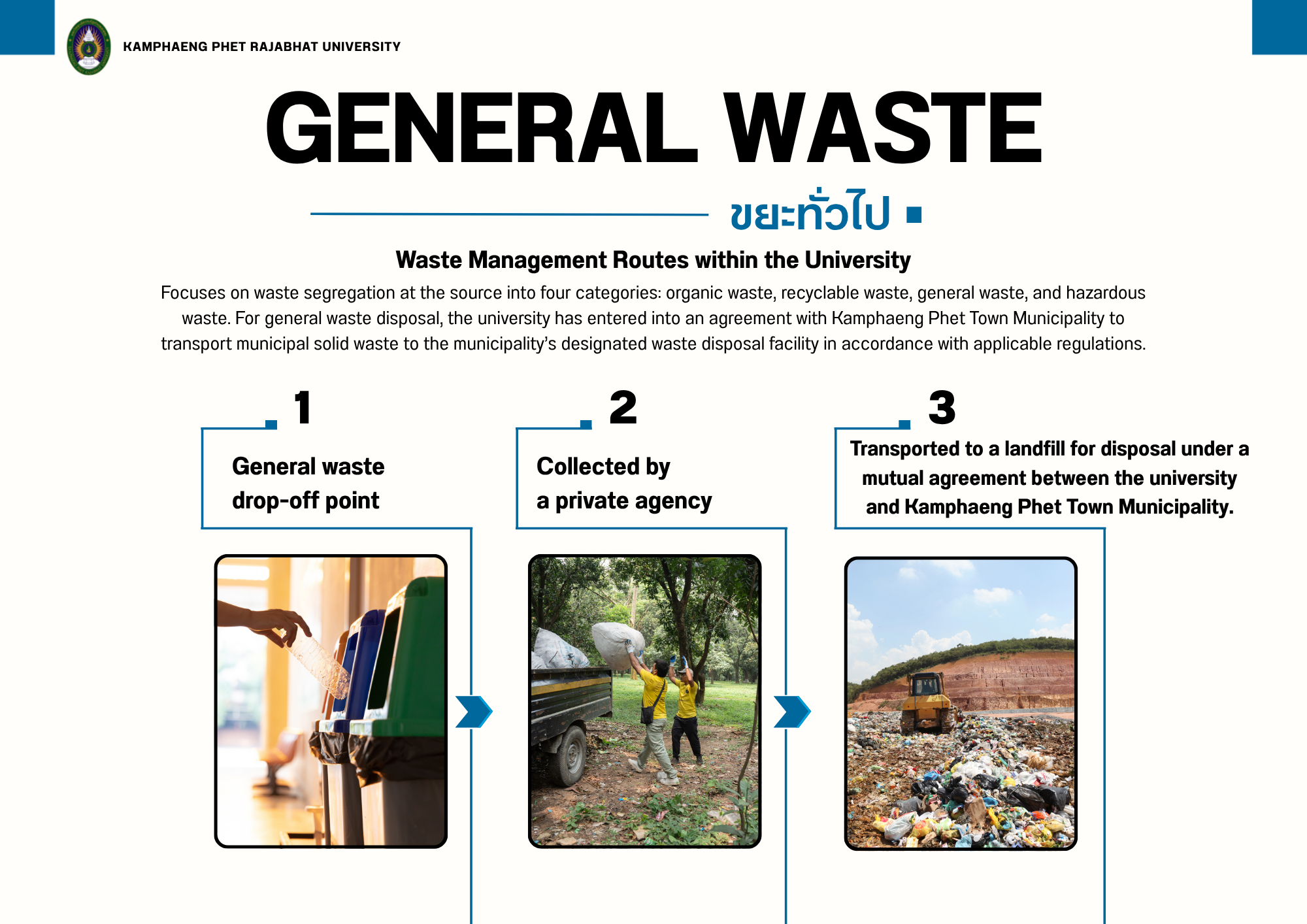
- General Waste – Includes plastic bags, snack wrappers, coffee straws, rubber gloves, and non-recyclable plastics. KPRU establishes waste management routes across its campus, promoting segregation at source into four categories: organic waste, recyclable waste, general waste and hazardous waste. Once organic waste, recyclable materials and hazardous waste have been separated for their respective management processes, the remaining general waste is collected for landfill disposal. The university provides designated general waste drop-off points. A private service provider collects and transports this waste to the municipality’s designated disposal facility under an agreement between KPRU and Kamphaeng Phet Town Municipality, in accordance with applicable requirements. The receiving organisation weighs the waste and provides statistical data to the university to monitor the amount of general waste sent to landfill. This process connects with recyclable waste segregation by separating recoverable materials before general waste is transported for final disposal. Weight data supplied by the receiving organization was served as supporting records for monitoring the amount of waste sent to landfill.
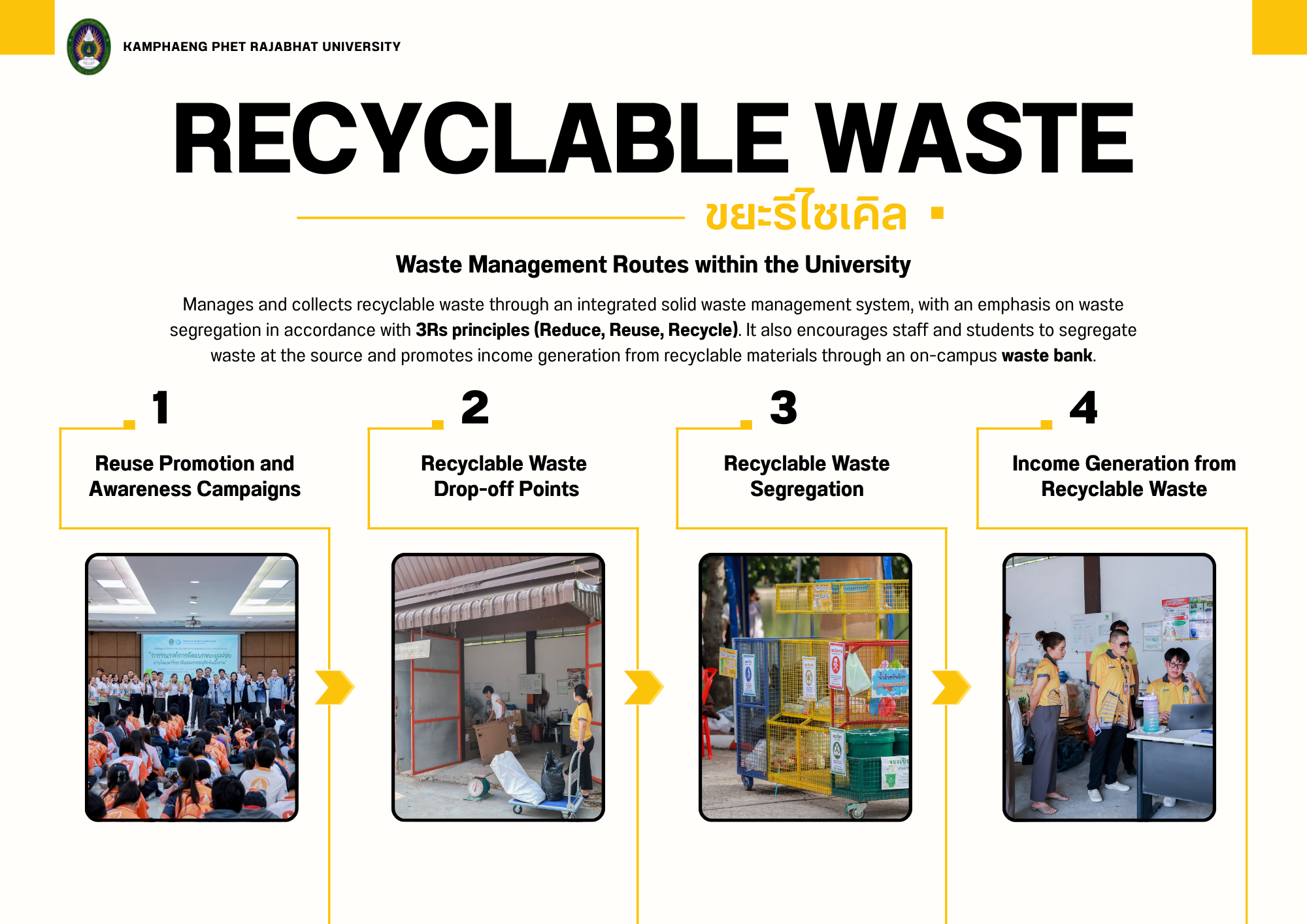
- Recyclable Waste – Includes recyclable plastics, office paper, glass, and metals. KPRU promotes waste management based on the 3Rs: Reduce, Reuse and Recycle. The university encourages staff and students to separate waste at source and provides recyclable waste drop-off points and facilities for sorting materials by type, separating recoverable materials from general waste. An on-campus waste bank supports income generation from recyclable materials. Records of recyclable waste received are maintained through the KPRU Wastebank system, enabling systematic data collection and monitoring of waste bank operations. These activities help return valuable materials to productive use and support the reduction of waste sent to landfill. This process connects with the management of general waste remaining after segregation, which is collected and transported for final disposal.
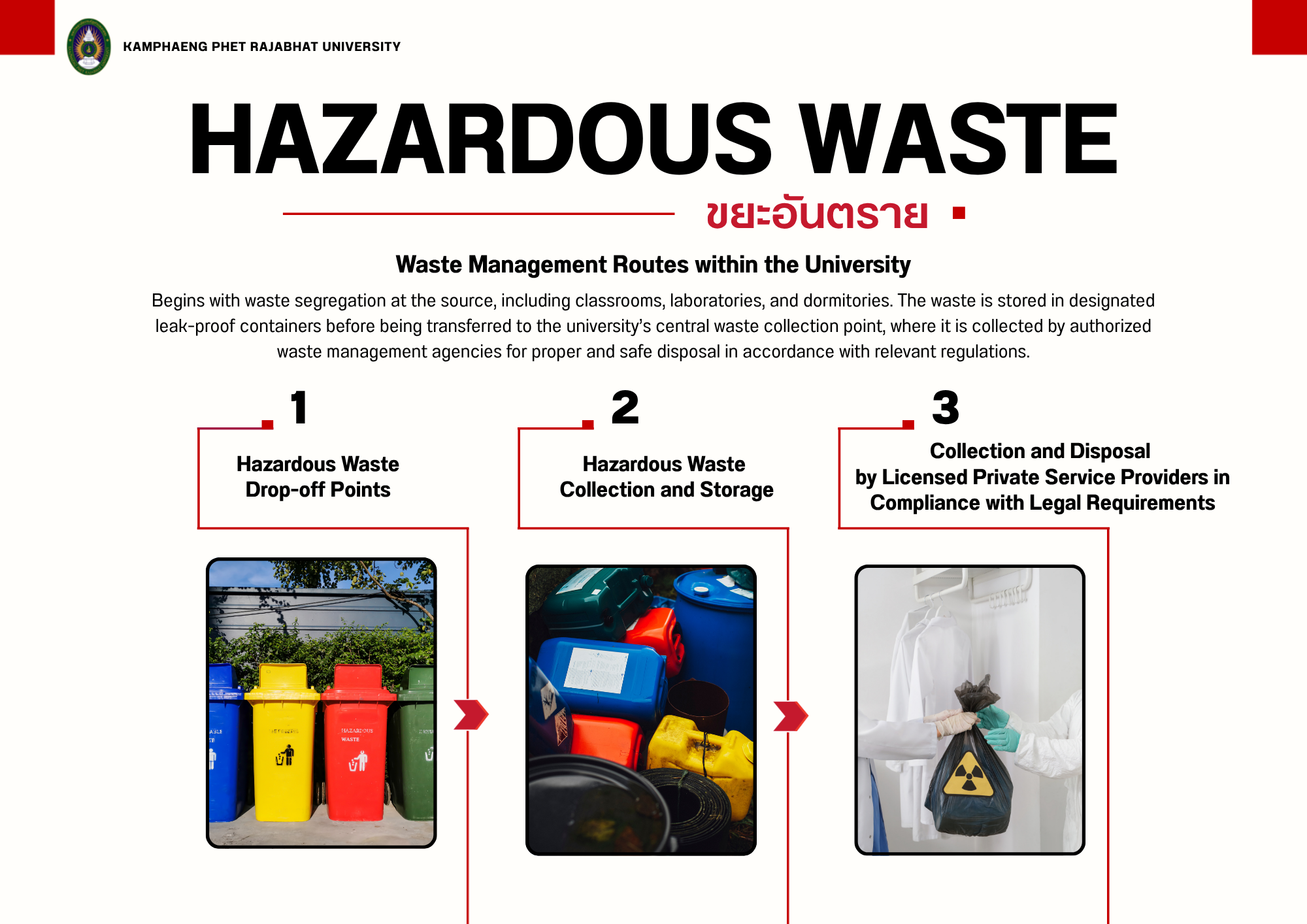
- Hazardous Waste – Includes batteries, flashlights, and other toxic materials. KPRU outlines a hazardous waste management process covering segregation, collection, storage and disposal. The process begins with waste segregation at its source, including classrooms, laboratories and dormitories, with designated drop-off points for hazardous waste. Hazardous waste is stored in designated leak-proof containers before being transferred to the university’s central waste collection point. Licensed private waste management providers then collect the waste for proper and safe disposal in accordance with relevant legal requirements.
- Infectious Waste – Includes used face masks and antigen test kits (ATKs). KPRU provides designated infectious waste bins on every floor to keep these materials separate from other waste. Housekeeping staff monitor the bins daily and manage collection in accordance with the guidelines of the Department of Health, Ministry of Public Health.
Additional Measures
- No burning of waste is permitted anywhere on campus.
- Monthly waste data recording: Housekeeping and field staff record the quantities of each waste type sent for recycling or landfill. Central administrators monitor and analyze performance against annual targets, aiming for a minimum 5% reduction in non-recyclable waste each year.
KPRU also uses information systems to support waste management. The university lists a waste reporting system (https://ga.kpru.ac.th/eservice) for recording and managing waste data. The UI GreenMetric waste management report (https://ga.kpru.ac.th/ui-green-files/category_3/3.13_kpru.ac.th_Planning%2C_implementation%2C_monitoring_and_or_evalua.pdf) describes the use of a waste bank system to record and monitor recyclable, general, organic and hazardous waste. The university publishes waste management information and reports through UI Green KPRU waste page (https://ga.kpru.ac.th/ui-green/?page_id=1065). Together, waste segregation, weighing and data recording support the monitoring of waste quantities and recycling activities
Through these systematic efforts, KPRU demonstrates its strong dedication to sustainable campus management, environmental stewardship, and the promotion of a zero-waste culture within the university community.